


MarTech Outlook: Specials Magazine
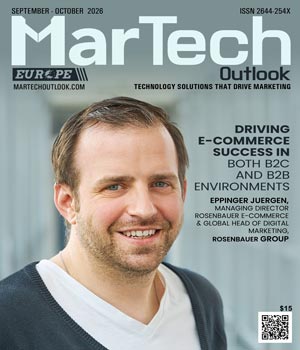
Juergen Eppinger is the Managing Director of Rosenbauer E-Commerce and Global Head of Digital Marketing. With a background in media technology and extensive marketing experience, he oversees all digital channels, including social media, websites and newsletters. He drives digital transformation initiatives, such as e-commerce, within the Austrian industrial group. Eppinger's leadership focuses on enhancing digital strategy and customer engagement. Through this article, Juergen Eppinger discusses the convergence of B2B and B2C in e-commerce and how Austrian company Rosenbauer launched an online shop to bridge the gap. He outlines the technical and strategic challenges faced, the solutions implemented and the critical role of soft skills and stakeholder collaboration in successfully integrating digital sales channels across different customer segments. For decades, the distinction between B2B and B2C has been well-defined, each having distinct characteristics. While necessary specifications still set them apart, the gap from a marketing perspective is shrinking. Today, information-gathering and purchasing behaviours are strikingly similar across both segments. A B2B customer expects the same ease of purchase as a B2C shopper, even if the options differ slightly. The process should be as seamless and intuitive as the buying experiences on platforms like Amazon, Zalando or Alibaba. How is it possible to combine B2B and B2C in e-commerce? What’s the ideal approach? The e-commerce landscape has witnessed an extraordinary surge, particularly since the COVID-19 crisis. Take Amazon, for example, with a staggering annual turnover of $400 billion. E-commerce is no longer just the domain of B2C; it has firmly entered B2B, B2G (business-to-government), and other sectors. Increasingly, companies aim to generate leads through traditional websites and leverage online stores as a direct sales channel. This was precisely the motivation behind Austrian company Rosenba
Marketing Analytics
Every marketing budget is ultimately a series of decisions about where to find the next customer, what to offer them and how to make each interaction more relevant. HolistiCRM brings those decisions together through a data science approach to customer relationship management. Its dedicated tools span acquisition, cross-selling and customer engagement, using artificial intelligence, machine learning and geospatial intelligence to help large B2C organisations act with greater precision across the customer lifecycle. Instead of optimising individual marketing activities in isolation, HolistiCRM connects them around one commercial objective of getting more value from every marketing pound, euro or dollar spent. “We approach marketing programmes from a data perspective,” says Csongor Csaba Fekete, founder and managing director. “We built our first AI models more than 20 years ago.”.

Mobile Marketing

The interaction between consumer behavior and digital marketing has reached a pivotal moment. Users navigating seamlessly between social media, shopping apps, and financial services often encounter frustrating obstacles like broken links that disrupt their experiences. These interruptions result in dissatisfied customers, leading to lost revenue and business opportunities. By identifying and overcoming these key challenges, marketers can create seamless, engaging experiences that truly connect consumers to their brands. That’s where URLgenius comes in. The platform offers app-linking solutions that perfectly align with the modern mobile consumer, arming businesses with the tools to enhance customer engagement and drive conversions. Its innovative app-linking technology minimizes friction in digital interactions, simplifying the user experience and improving conversion across various platforms. “We transform potential disruptions into smooth, effective connections between apps and marketing channels, ensuring that consumers enjoy every step of their journey,” says Scott Allan, CMO, URLgenius.
Influencer Marketing Solutions
Influencer marketing has evolved from a trendy tactic into a cornerstone of modern brand strategy - but not without its growing pains. For years, the industry operated under the assumption that more collaborations and more content would naturally lead to more visibility. The result was a flood of generic, uninspired posts that blurred together and failed to make a lasting impact. Today’s consumers expect more. They’re smarter, more selective, and increasingly immune to content that feels inauthentic or irrelevant. The old playbook - volume over value - no longer delivers. That’s where RAD Intel, or RAD Intel, enters the scene. By redefining influencer marketing around authenticity, resonance, and real results, RAD Intel cuts through the noise to create campaigns that connect and convert. RAD Intel is an AI technology company redefining how brands connect with audiences. Its advanced language models analyze audience interests and behavior to automate smarter, more precise content strategy and delivery. The platform’s award-winning AI also eliminates bias in influencer selection, helping brands create authentic connections, drive stronger engagement, and deliver measurable ROI. Remove All Doubt Founded by serial entrepreneur Jeremy Barnett, RAD Intel was born out of a deep understanding of influencer marketing’s untapped potential. Barnett’s journey into the space began long before the term “creator economy” entered the mainstream. As the founder of Trendy Butler, a subscription-based fashion tech startup launched in 2012 and successfully exited in 2017, Barnett was an early adopter of influencer strategies. At that time, placing a product in the hands of an influencer could result in an immediate spike in traffic and sales. But as the space matured, those results became harder to replicate. “When we launched RAD, the goal was to streamline the entire influencer activation process - not just finding the right influencer, but understanding the right message, the intended impact on the audience, and how to monetize that content across the marketing funnel,” says Barnett. The challenge, as he saw it, wasn’t simply one of scale or automation. It was rooted in bias and subjectivity. Brands were choosing influencers based on gut feeling, personal preference, and flawed data sets. Even the more advanced tools on the market relied heavily on keyword searches and surface-level metrics, often missing the mark when it came to identifying who could truly move an audience to action.

Programmatic Advertisement

Embracing Change and Innovation for Digital Marketing Success
Henry Reed, Director of Digital Marketing, Warner Bros. Discovery [NASDAQ: WBD]
Google Marketing
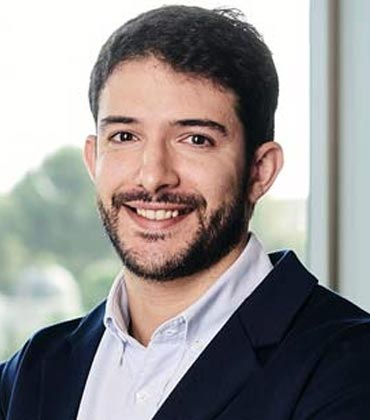
Building Personalisation with Data-Driven Insights
Miguel Molina Alen, Director of Conversion Rate Optimisation (CRO) and Personalisation, Radisson Hot
Event Management
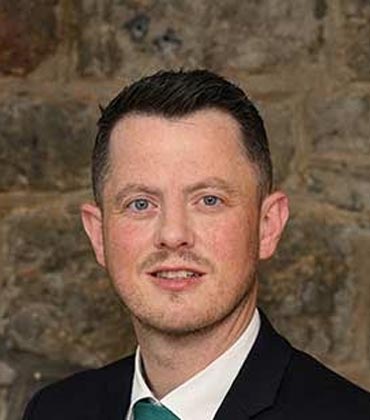
The New Discipline of Hospitality Marketing Leadership
Philip Kelly – MIHI, Head of Sales and Marketing - Newpark Hotel & Jurassic Newpark, Newpark Hotel
Brand Management

The New Code of Hospitality Branding
Anja Keplin, Senior Director of Marketing & Communications, MEININGER Hotels
Brand Management

Building Successful International Marketing Strategies for Seed Treatment
Palle Pedersen, Global Head Disease Control, Syngenta Seedcare

IN MY OPINION
Marketing Analytics
The Evolution of Marketing in Entertainment Spaces
Ian Fitzpatrick, Senior Marketing Strategy Manager, Buzz Bingo
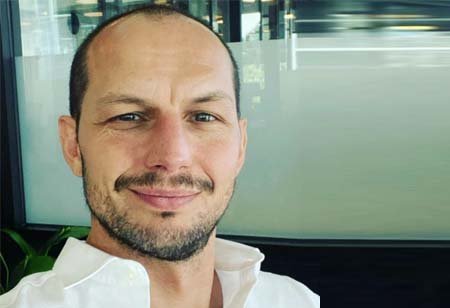
LAST WORD
Event Management
The Evolving Power of Voice of the Customer: From Insights to Business Opportunity
Marco Ottaviani, Head of CRM and Customer Activation, MSC Cruises
IN FOCUS

Advertising Automation: Reshaping Digital Growth across Europe
European advertising is becoming smarter through automation, audience targeting, predictive analytics and privacy-conscious strategies that improve campaign performance and efficiency.

Unlocking European Revenue: The Power of Sales Intelligence
Sales intelligence platforms help European businesses improve prospecting, data quality, market visibility, and revenue decision-making.
EDITORIAL
Finding Clarity in Marketing Complexity
Featured in this edition, HolistiCRM, recognised as the Top AI Powered Marketing Optimization Platform in Europe 2026, takes a connected approach to decisions across the customer lifecycle. Its capabilities combine AI, machine learning and geospatial intelligence to support acquisition, cross-selling and customer engagement. From identifying high-potential locations through BeSpatial.AI to developing personalised recommendation models and coordinating specialist AI marketing agents, the company focuses on helping organisations achieve stronger commercial outcomes. It also retains human oversight while placing privacy at the centre of its approach. Its work shows how deeper analysis can help organisations cut through marketing noise and make more informed decisions about where and how to engage customers.
This edition also brings valuable perspectives on the changing marketing landscape. Henry Reed, Director of Digital Marketing at Warner Bros. Discovery, examines the uncertainty surrounding cookies, fragmented data and changing digital channels. He highlights the importance of adaptability, platform-specific strategies and a willingness to continually test and evolve. Ian Fitzpatrick, Senior Marketing Strategy Manager at Buzz Bingo, explores how customer data can be translated into action through segmentation, experimentation and personalised engagement while balancing immediate performance with long-term brand growth.
Together, these perspectives show that effective marketing is not simply about having more technology or more data, but about using both with greater clarity and purpose. We invite readers to explore this edition and consider how intelligent analysis, adaptability and thoughtful decision-making can shape the future of marketing.
