


HolistiCRM
Reducing Marketing Noise with Smarter AI

 Csongor Csaba Fekete, Founder and Managing Director
Its dedicated tools span acquisition, cross-selling and customer engagement, using artificial intelligence, machine learning and geospatial intelligence to help large B2C organisations act with greater precision across the customer lifecycle. Instead of optimising individual marketing activities in isolation, HolistiCRM connects them around one commercial objective of getting more value from every marketing pound, euro or dollar spent.
“We approach marketing programmes from a data perspective,” says Csongor Csaba Fekete, founder and managing director. “We built our first AI models more than 20 years ago.”
Today, organisations across more than six industries and 23 countries rely on over 136 models to turn customer and location data into sharper commercial decisions.
Location Intelligence Sharpens Acquisition
Through its BeSpatial.AI capability, developed through work with the European Space Agency, HolistiCRM analyses anonymised and aggregated customer information alongside GIS and Earth observation data. It identifies areas that resemble locations where a client already has a strong customer base. Marketing teams can then focus their spending on places with a higher likelihood of conversion.
This changes the economics of acquisition. HolistiCRM reports an average ROAS that is 2.2 times that of control groups. One home insurance use case showed a 16.4-fold difference in ROAS between the strongest and weakest locations within the same city.
Personalisation Extends the Customer Relationship
Once a customer enters the relationship, HolistiCRM turns to personalisation and cross-selling. For an e-commerce client, the existing sales model was driven heavily by vendor discounts. HolistiCRM built an AI-based recommendation engine using browsing behaviour, email interactions and previous purchases to predict the products each customer was most likely to choose. The client recorded a 2.5-times increase in email open rates and a five-times increase in click-through rates.
-
Our goal is to reduce marketing and sales noise. It should be about giving the right offer at the right time to the right customer.
This lifecycle view also reaches customer service and marketing execution. AI chatbots use customer history and company knowledge to tailor responses, while marketing automation turns relevant industry developments into on-brand blog and social content.
Specialist Agents Compress the Analysis
Behind that execution sits a network of 42 specialist AI marketing agents, built in stages through 2026. Each owns a single discipline, from search and keyword research to paid media, measurement, pricing and behavioural science, rather than covering marketing generally.
The value, in practice, lies less in any individual agent than in what passes between them. A finding from the competitive-intelligence agent reshapes the keyword list, which changes the paid-media plan, which changes the content calendar. A second round then surfaces competitors and keywords that the first missed. Standardised connectors to Google Ads, Analytics, Search Console and CRM systems mean the analysis rests on a client’s actual account data rather than assumptions.
Two agents act as gates before anything reaches a customer. One checks the behavioural mechanism and backfire risk of a message, the other data protection, consent and sector rules. Human sign-off is always retained.
“Proper analysis at this depth was always possible. It just took an agency team weeks,” says Fekete. “The agents do the analysis and the drafting; the client’s team still decides.”
Custom Models Built on Privacy
HolistiCRM trains models around each organisation’s customer base, business model and product portfolio instead of deploying a single model across every client. By automating much of the model-generation process, it reduces time to market, with some BeSpatial.AI models delivered within around two weeks.
Privacy is built into that approach. BeSpatial.AI works with anonymised, aggregated data at a 100-by-100-metre level. It learns the profile of a location rather than the identity of an individual customer.
The broader value becomes most visible when multiple HolistiCRM capabilities work together. One customer using a wider mix of its solutions increased acquisition 4.5-fold within a few months. HolistiCRM measures success through outcomes such as cost per acquisition, conversion, cross-sell performance and customer-level EBITDA.
“Our goal is to reduce marketing and sales noise,” concludes Fekete. “It should be about giving the right offer at the right time to the right customer.”
Sharper Targeting For Fixed Marketing Budgets
Marketing teams can buy more automation without improving the decisions that consume the budget. Paid media platforms already automate bidding and audience expansion, yet those systems still work from the signals available to them. The harder buying question is whether an AI marketing platform improves those signals before money is committed. For large B2C marketers, that...Read more
Innovation Insights
Orchestrating AI for Marketing Advantage
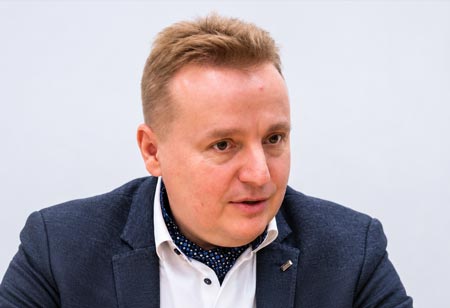
Csongor Fekete, Managing Director, HolistiCRM
Agents Are the Interface. Your Data Is the Advantage.
AI-Powered Marketing Optimization Platforms in Europe Info
Q1
What Are AI-Powered Marketing Optimization Platform Solutions Designed To Do?
AI-Powered Marketing Optimization Platform solutions apply machine learning, customer data and campaign signals to improve decisions across acquisition, targeting, personalization and budget allocation. The strongest approaches connect these functions rather than treating each campaign as an isolated activity. They can help marketing teams identify higher-value audiences, adjust channel spending and improve the relevance of offers while keeping performance measurement tied to commercial goals.
Q2
How Does HolistiCRM Apply AI-Powered Marketing Optimization Platform Capabilities?
HolistiCRM combines machine learning with digital acquisition, customer lifecycle management and campaign performance optimization. Its BeSpatial.AI solution uses anonymized location profiles enriched with Earth observation and GIS data to identify areas resembling the neighborhoods of strong customers. The company says its models can distinguish good and poor locations for B2C advertising with 86 percent accuracy. Its approach also includes AI-supported PPC optimization and location-based targeting.
Q3
Which Capabilities Matter Most When Evaluating These Platforms?
An effective AI-Powered Marketing Optimization Platform should support more than automated ad decisions. Buyers should examine how well it handles audience modeling, cross-channel budget allocation, recommendation logic, analytics and integration with existing marketing processes. Data requirements also matter because useful models depend on the quality and availability of business information. Evaluation should include model transparency, measurement methods, implementation time and the ability to translate recommendations into practical campaign changes.
Q4
How Can AI-Powered Marketing Optimization Platform Technology Improve Customer Engagement?
AI-Powered Marketing Optimization Platform technology can use behavioral signals and customer lifecycle information to determine which offers, channels or messages are most relevant. Recommendation models can support both new visitors with limited history and established customers with richer purchase or engagement data. HolistiCRM applies this principle through session-based recommendations for new customers and next-best-offer models for onboarded customers. Its machine learning recommendation engine has also been used for cross-sell activity and channel optimization.
Q5
What Makes HolistiCRM’s Approach Relevant To Marketing Optimization?
HolistiCRM brings several AI-Powered Marketing Optimization Platform functions into a broader customer acquisition and marketing framework. Its services cover SEO, PPC, campaign automation, hyper-personalized cross-selling, rich business messaging and marketing budget optimization. The company also describes a cross-platform budget model designed to allocate spending according to business benefit rather than optimizing only within individual advertising platforms. In one banking application, its Best Mix model saved 55 percent of call-center capacity while improving cross-sell efficiency by 40 percent.
Q6
How Should Organizations Measure Results From AI-Powered Marketing Optimization Platform Investments?
Results should be assessed against the business decision the technology is intended to improve. Useful measures can include acquisition efficiency, conversion, customer value, campaign response, budget utilization and changes in channel performance. AI-Powered Marketing Optimization Platform evaluations should also compare modeled recommendations with actual outcomes over time. A platform is more useful when its outputs can be traced to measurable changes in marketing performance, allowing teams to determine whether better targeting, personalization or budget allocation is producing meaningful commercial value. It should also make performance changes understandable to marketing teams so they can refine campaigns, validate assumptions and decide where additional investment is justified.
| Share this Article: Tweet
|
Company
HolistiCRM
Management
Csongor Csaba Fekete, Founder and Managing Director
Description
HolistiCRM positions itself as a full‑stack AI growth partner that transforms how companies acquire, engage and retain customers. By combining machine-learning-driven SEO, predictive digital acquisition, geospatial intelligence, and next-best-offer personalisation, the company helps brands unlock higher conversion rates, smarter marketing spend, and stronger EBIT impact.